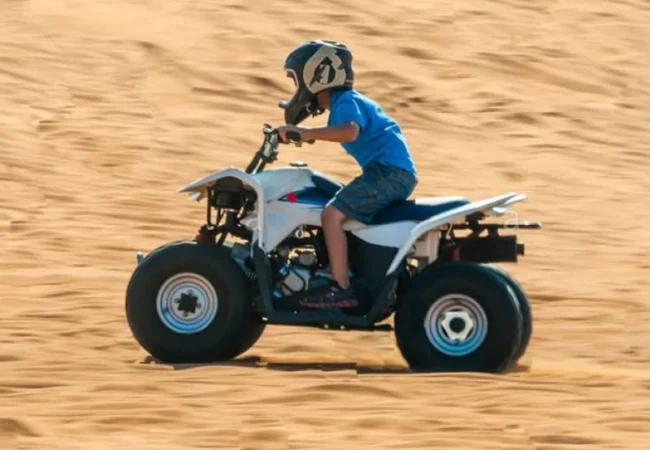
 AED 150
Yamaha 90cc
- Ages 9-12
- Track
- Supervised
Scaled down for smaller hands and a softer throttle pull, and kept on its own flat loop rather than the dune route the adults ride. A real machine sized to a child, not a toy.
Book this ATV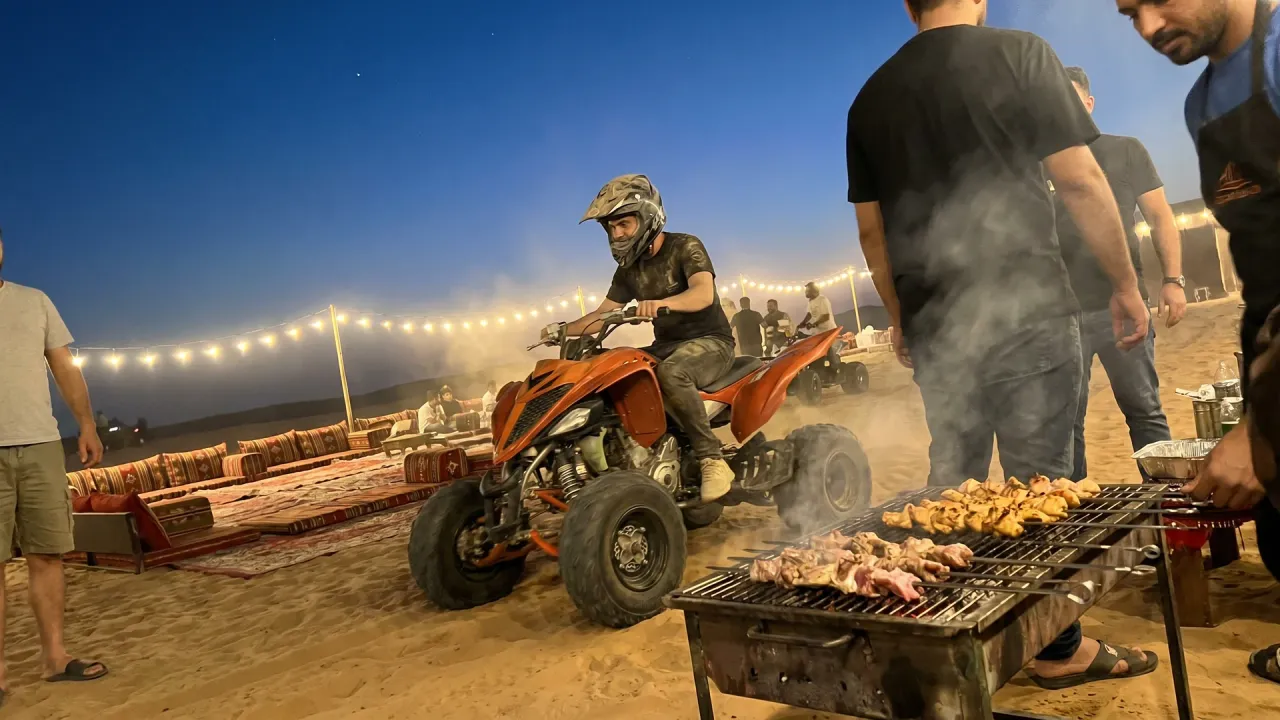
“Just pick an ATV” undersells what is actually parked on the rack at Al Lahbab. Eight distinct machines share this fleet, from a supervised 90cc built purely for children through to a Raptor 700cc gated behind a rider check, and the gap between them runs well past horsepower. This page breaks down what genuinely changes machine to machine, and how that decides which one lands under you.
Eight machines make up this fleet, and the price tag is really a proxy for size and power: AED 150 for the supervised kids' 90cc, AED 200 to put an adult on the 220cc, AED 250 for the 400cc that most riders end up on, then a Grizzly 450cc and a sports 625cc before the ceiling lands at AED 795 for a cleared Raptor 700cc rider. Every machine is one rider, one guide leading the pack, out on the Al Lahbab red dunes roughly 45 minutes from Downtown.
Short on time to work out which machine is right for you? Pair whichever one you land on with the evening safari and BBQ camp for AED 375 all together, and you've booked the single most popular combination on this site, with a drive-along safari built in for anyone in your group who would rather not ride. Secure online advance payment confirms your booking, support available 24/7.
Each figure below covers one person on one machine, except the 400cc double, which seats a pair for a single fee. What genuinely separates one row from the next has less to do with top speed and more to do with how forgiving that particular machine feels over rough ground, so read this table as a guide to that rather than a plain price list.
| Machine | Suits | From |
|---|---|---|
| Yamaha 90cc | Ages 9 to 12 only, run on its own supervised loop away from the adult route, guardian within sight throughout. | AED 150 |
| Yamaha 220cc | The lightest adult frame on the rack — low seat, soft throttle response, built to be hard to get wrong on a first attempt. | AED 200 |
| Yamaha 400cc | Same family as the 220cc with a longer throttle band, which is why the standard adult route is built around it. | AED 250 |
| Yamaha 400cc double | The same 400cc frame widened for a second seat behind the rider — one throttle, one fee, two people out on the dunes together. | AED 350 |
| Yamaha 400cc turbo | Chassis and riding position stay identical to the standard 400cc; what changes is how hard it pulls out of soft sand. | AED 350 |
| Yamaha Grizzly 450cc | A heavier utility build with a wider stance than the 400cc-class machines — planted rather than playful, and the pick for longer routes. | AED 450 |
| Sports quad 625cc | A sharper, sport-tuned chassis that rewards standing and shifting your weight instead of sitting still, and is unforgiving if you don't. | AED 700 |
| Yamaha Raptor 700cc | Top of the fleet by a clear margin, and the only machine here a guide will not hand over without a short conversation first. | AED 795 |
Seven of these carry the Yamaha badge; the sports quad rounds out the lineup under its own name. All eight run the same red-dune terrain at Al Lahbab, but what is actually underneath each one is genuinely different.
AED 150Scaled down for smaller hands and a softer throttle pull, and kept on its own flat loop rather than the dune route the adults ride. A real machine sized to a child, not a toy.
Book this ATV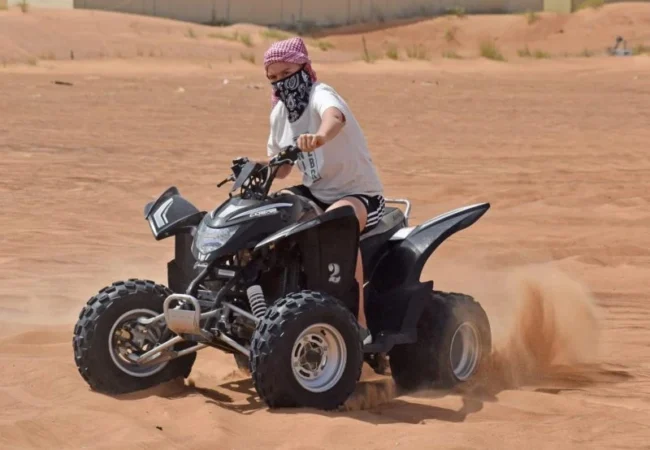 AED 200
Every control on this frame is tuned toward forgiveness — soft throttle response, a low seat, and very little that punishes a bad line. First-timers get steered onto this one by default.
Book this ATV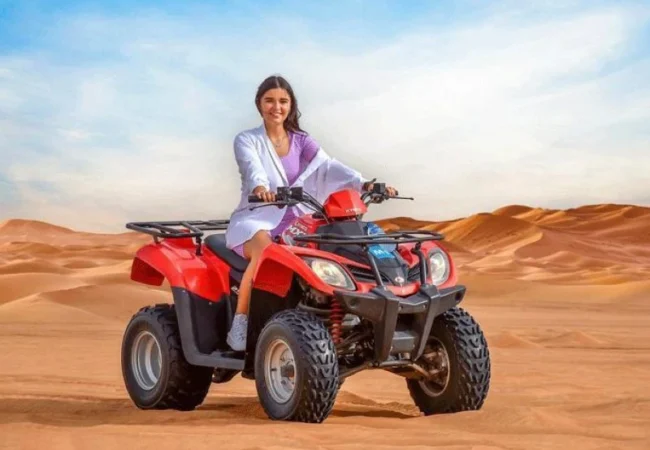 AED 250
The frame the standard route is actually designed around, which is why the climbs, the bowls and the pacing all assume you are on this exact machine. Ask a guide what most people ride.
Book this ATV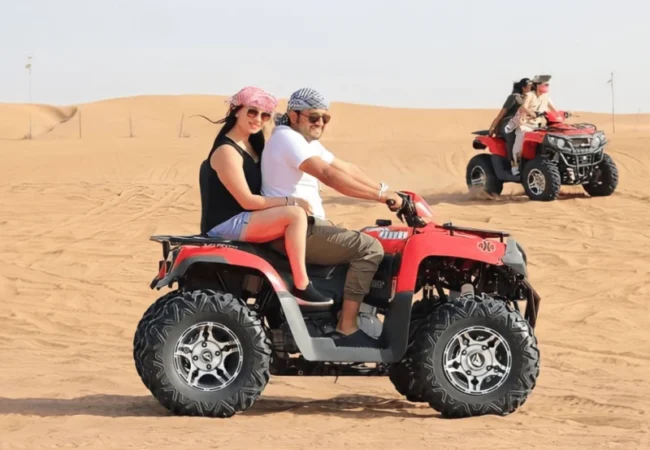 AED 350
The same 400cc platform, built out with a passenger seat and grab rail behind the rider. One person drives, one holds on, and the fee covers the machine rather than the headcount.
Book this ATV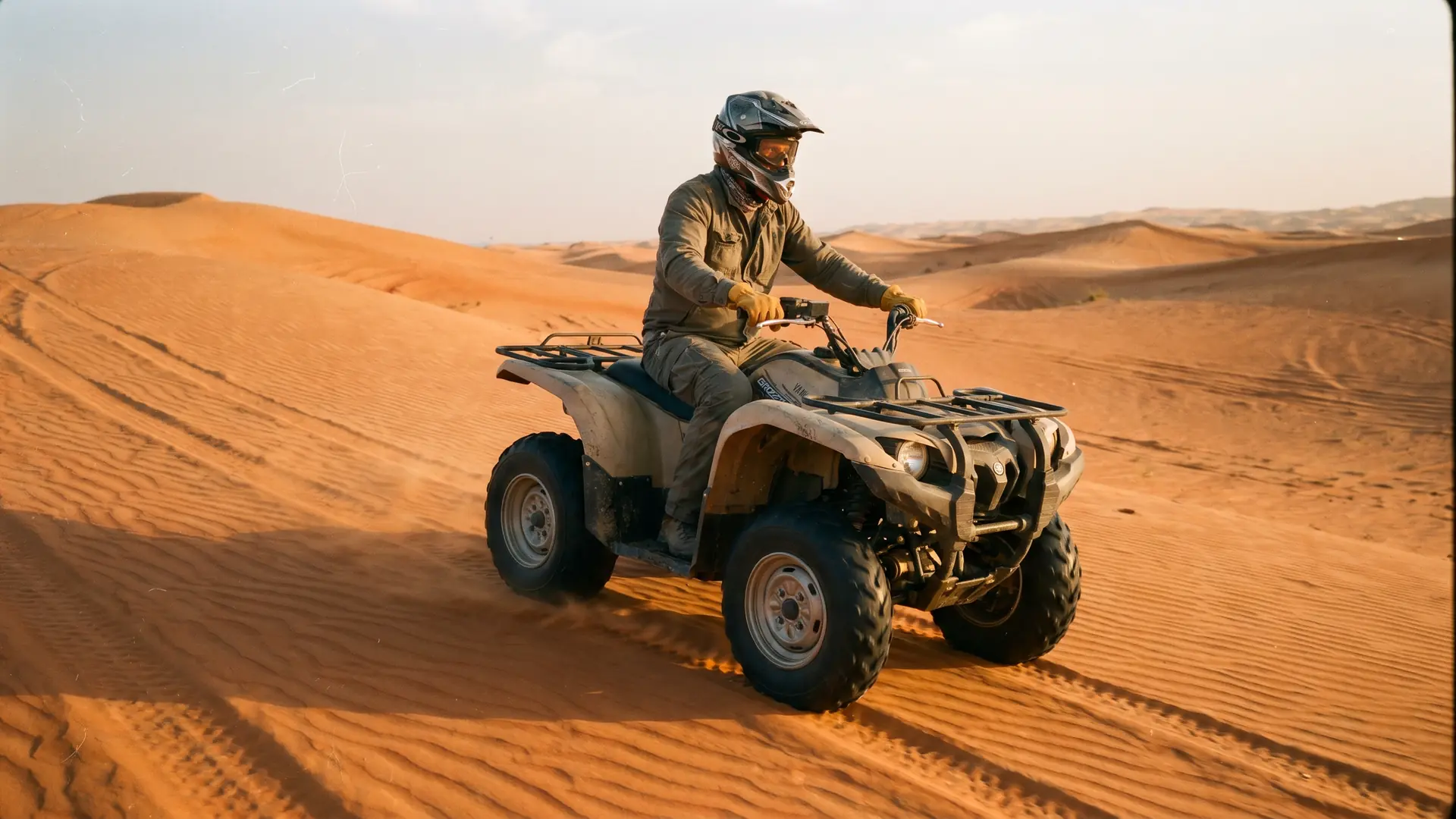 AED 350
Seating position and chassis stay identical to the standard 400cc — the difference shows up entirely in how it responds when you open the throttle on a soft climb.
Book this ATV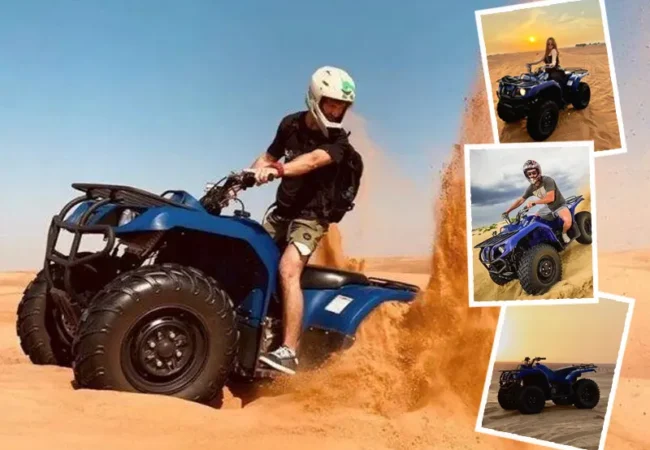 AED 450
Heavier through the frame and wider through the stance than anything in the 400cc class, trading a little agility for a machine that shrugs off a longer, rougher route.
Book this ATV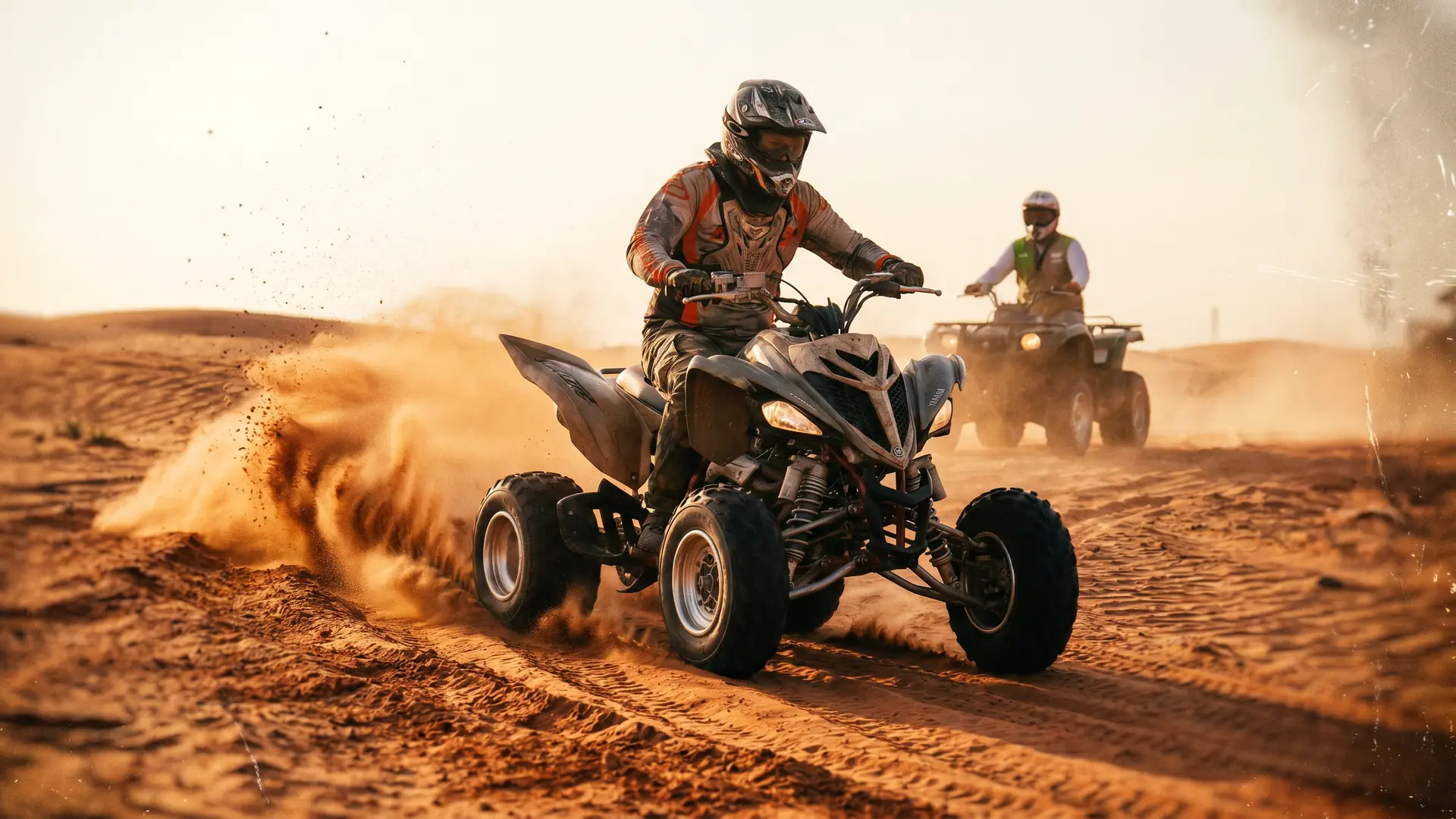 AED 700
A genuinely different riding position from everything below it on this list — you stand more, lean into the turns more, and the machine expects your body weight to do some of the work.
Book this ATV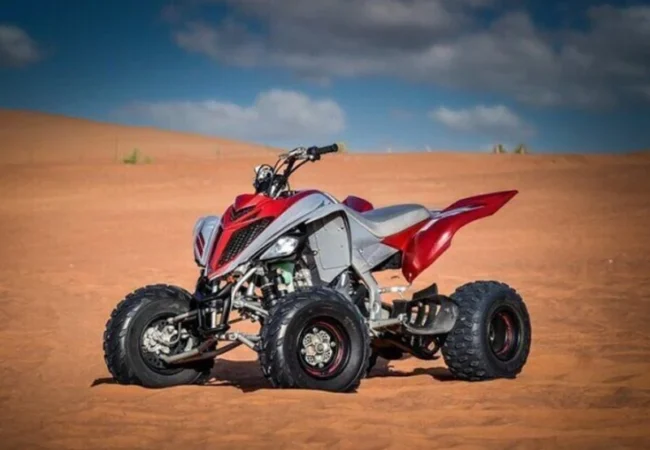 AED 795
The one machine on this rack that comes with a conversation attached. Guides ask what you have ridden before handing over the keys, and the answer decides whether you get it.
Book this ATVAn ATV session alone runs about an hour; the drive out and back eats close to ninety minutes on top of it. Folding in the safari and dinner is what actually makes the trip worth it, which is why these four outsell the standalone booking.
 AED 375
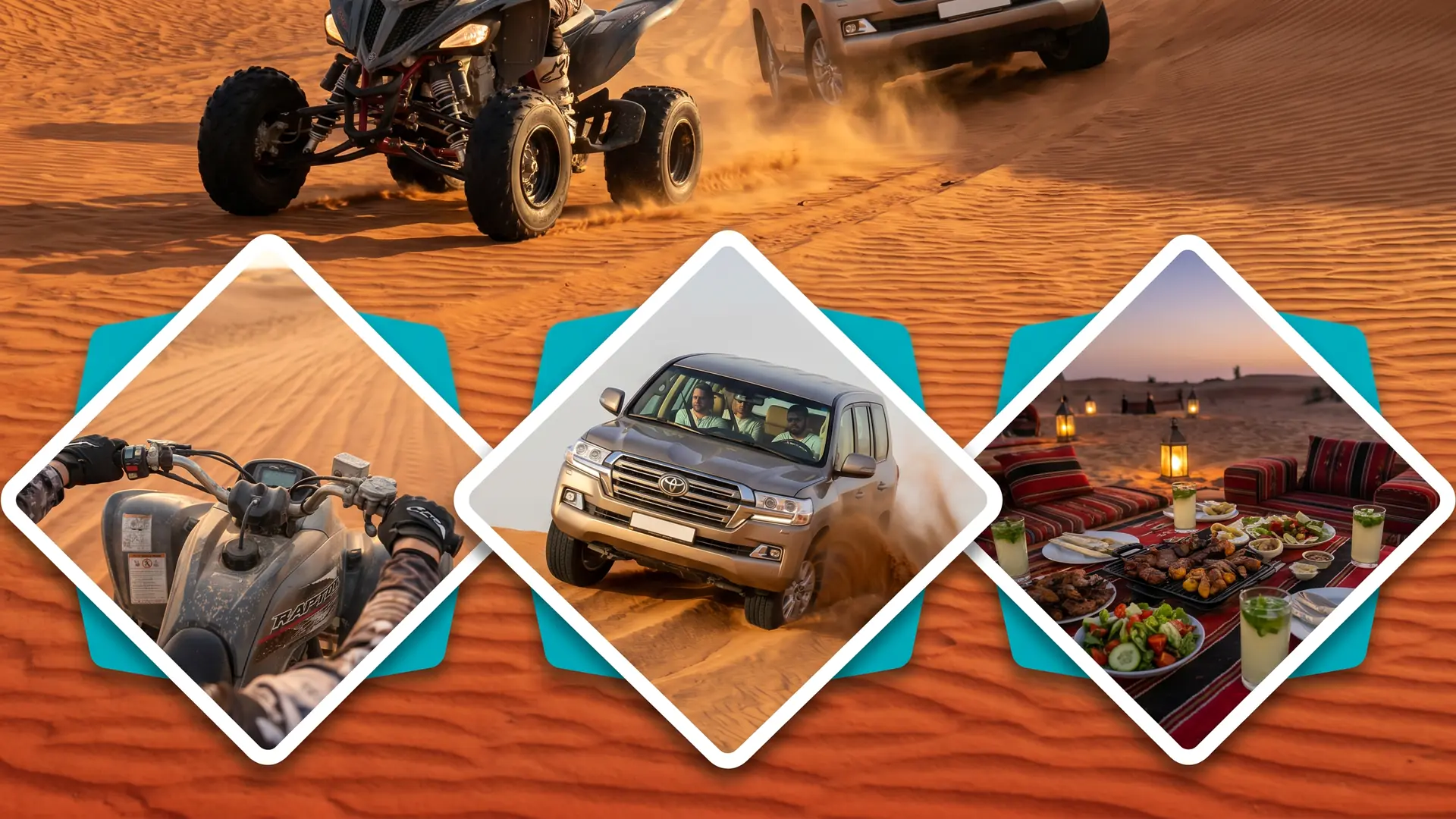
A Land Cruiser handles the dune bashing, you handle your own machine on the ATV leg, then the group closes out the evening at the halal BBQ camp as the light drops. The single most-booked package on this site.
Book this tour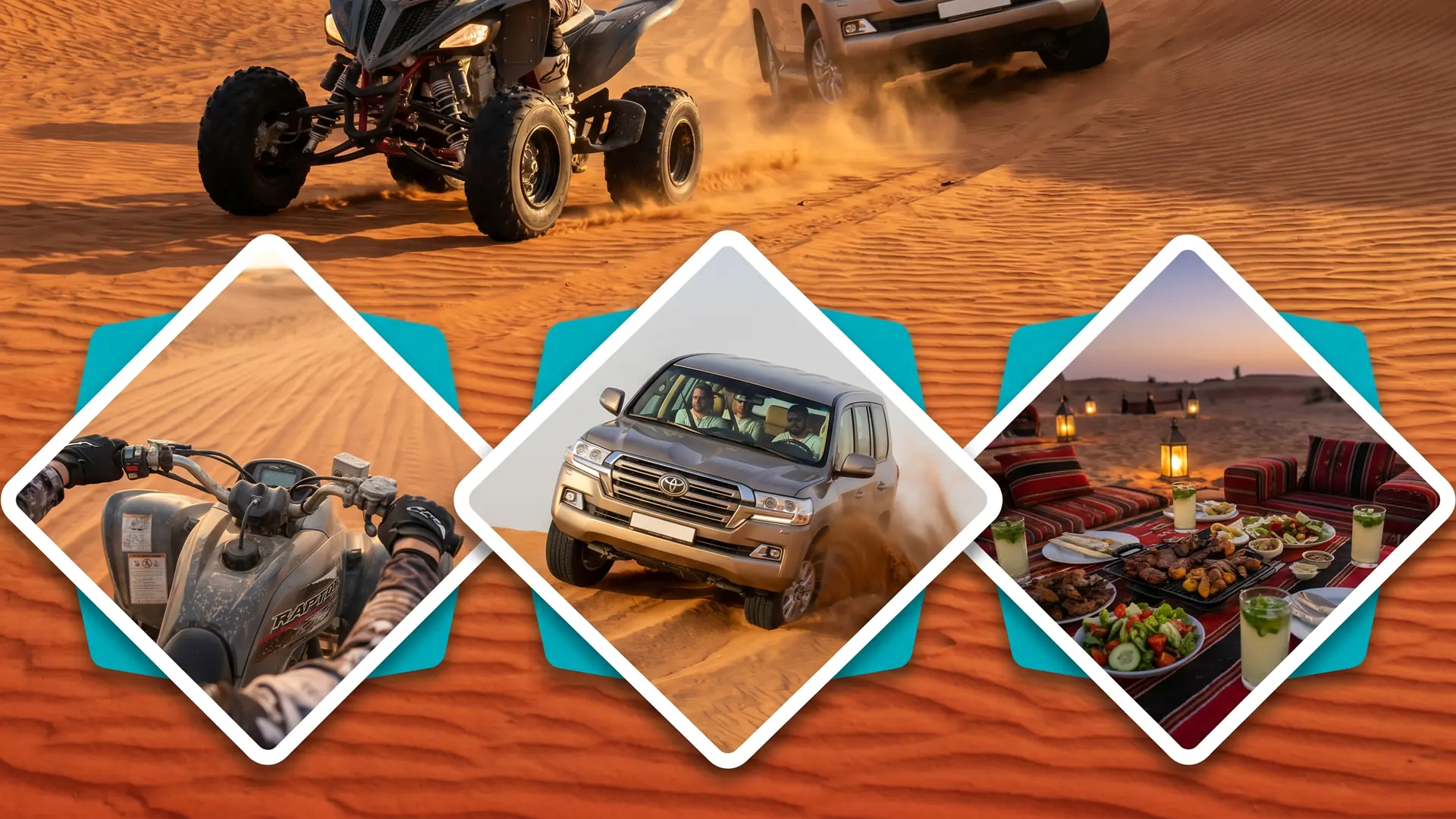 AED 290
A night spent settling leaves the sand denser by morning, which quietly works in your favour if this is your first attempt at any of the climbs. You're wrapped up and heading back into town well before lunch is even a question.
Book this tour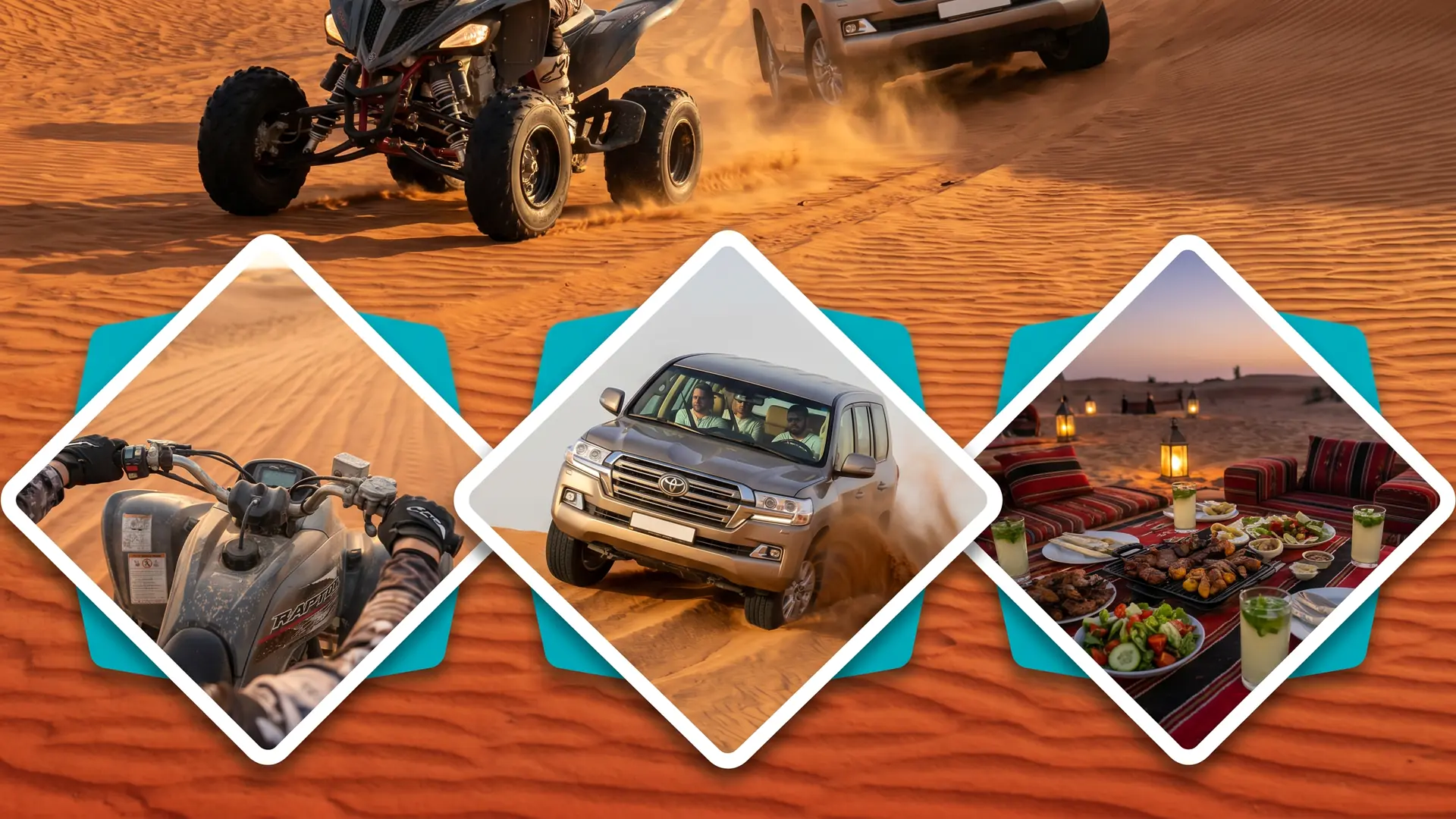 AED 700–1,300
Built for anyone who would rather skip being driven around in a 4x4. Dune bashing drops off the itinerary; your ATV session and the camp dinner stay. The final figure tracks whichever machine you pick.
Book this tour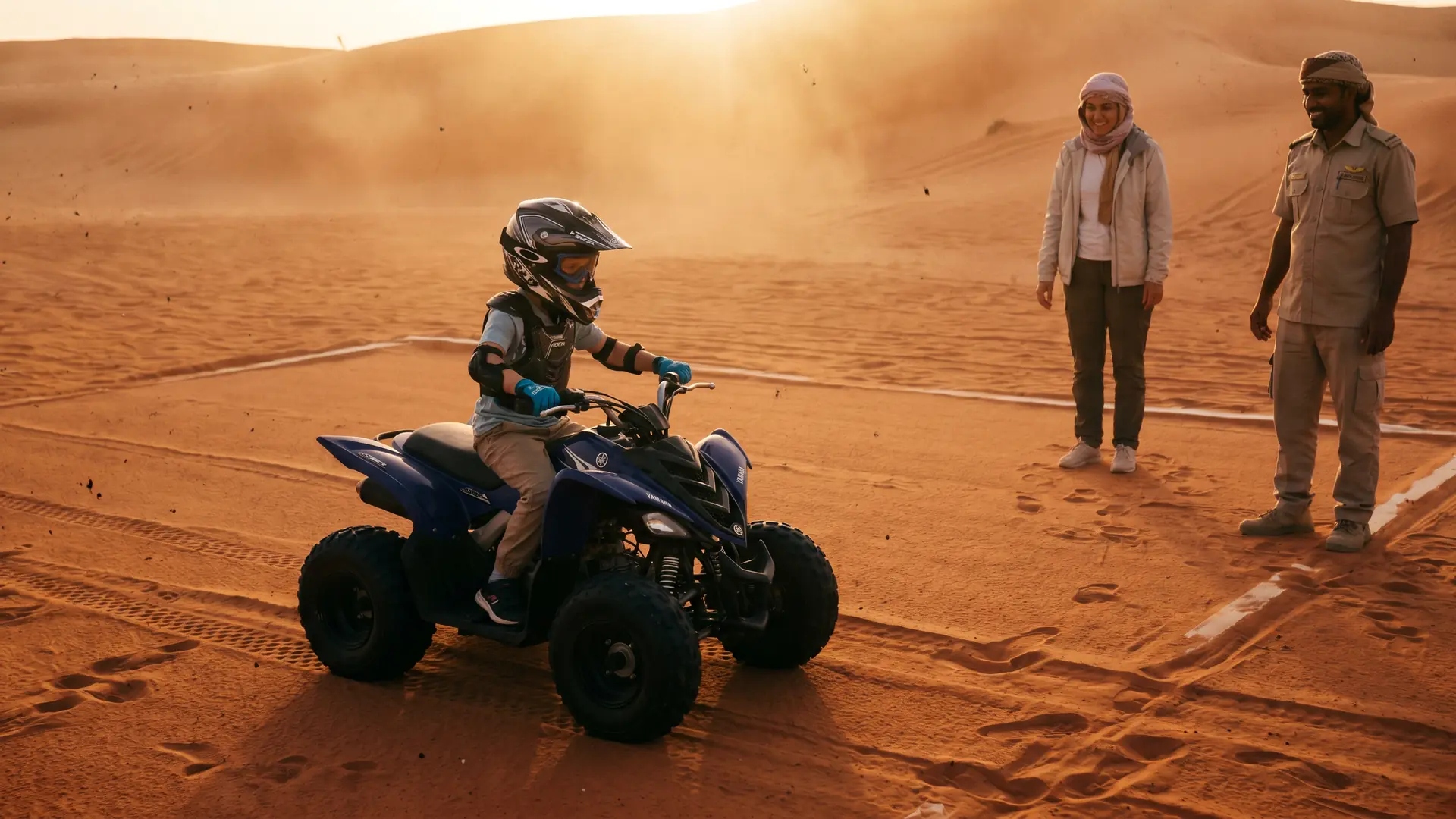 AED 150
Kids work the 90cc loop under supervision while the adults are out on a full adult route, both groups sharing the same base and the same time window so nobody sits around bored in the meantime.
Book a family tourCars do not count toward this — think motorbikes, jet skis, dirt bikes, anything you control with a throttle under your right hand.
Distance changes this booking more than most people budget for ahead of time.
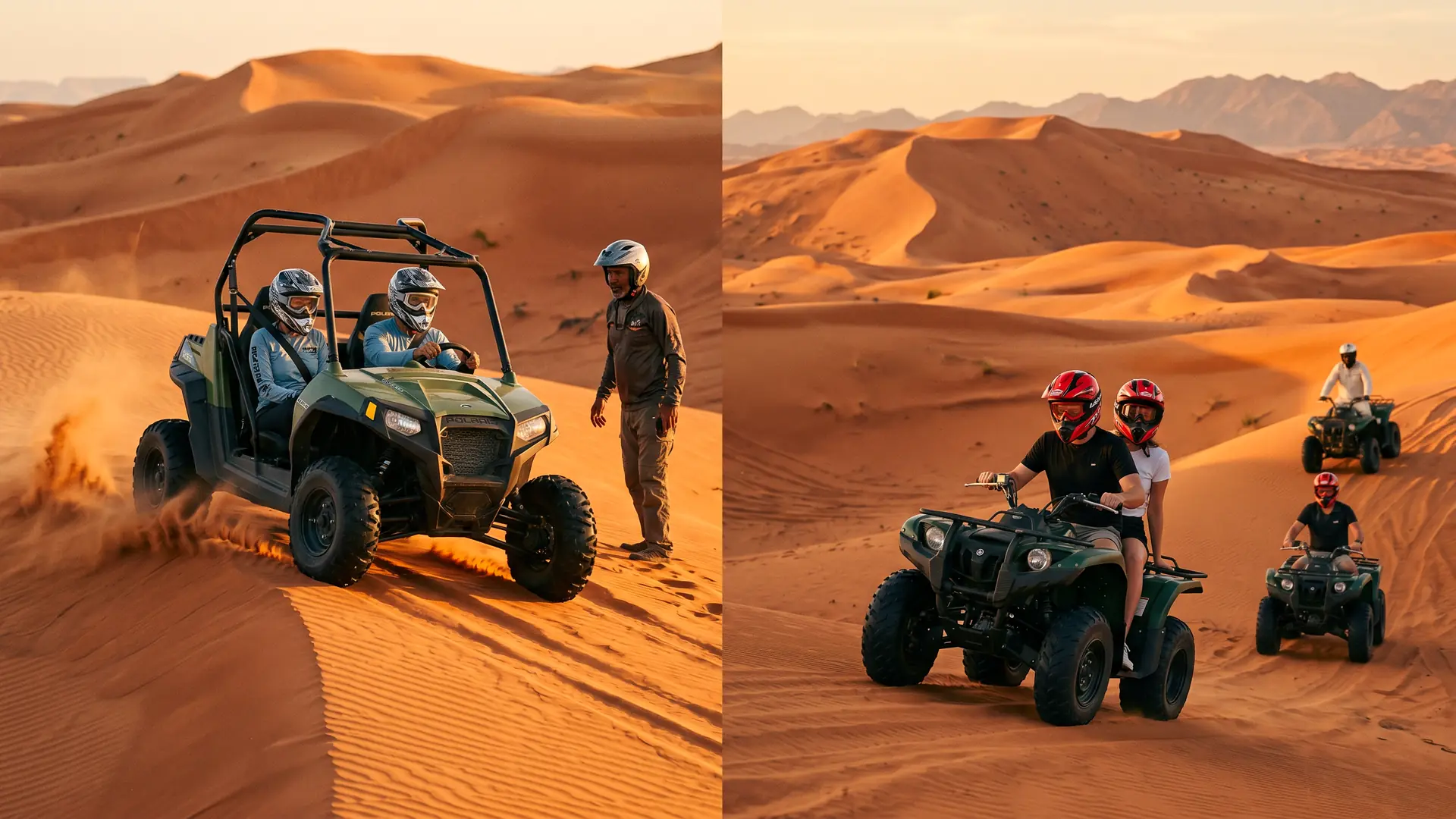
Straddle a handlebar machine for an ATV session, or climb into a roll cage and steer with a wheel instead — that's the real split between the two, and quite a few people here book both in the same day.
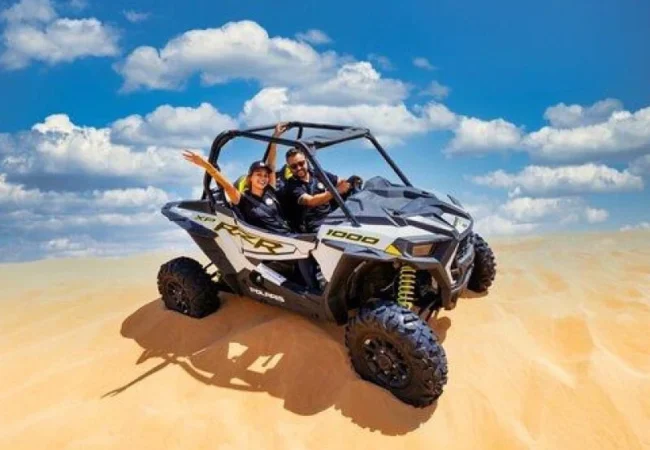
The lightest buggy on the lineup, easiest to correct mid-turn if you misjudge a line, and a natural next step if the ATV felt like the smaller commitment.
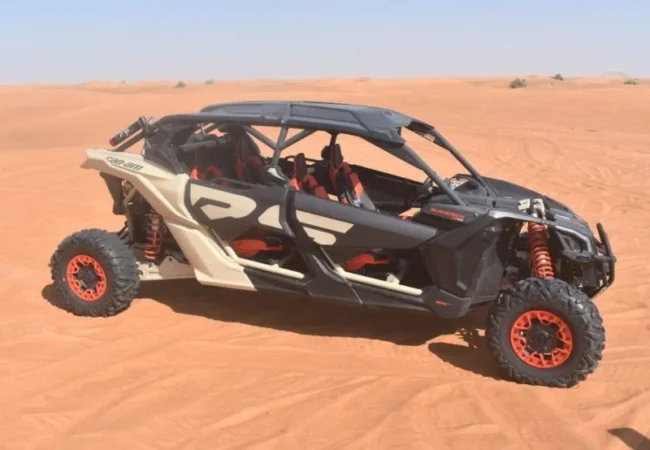
A wider stance and longer suspension travel than the RZR, built to carry the whole group under one fee instead of charging per seat.
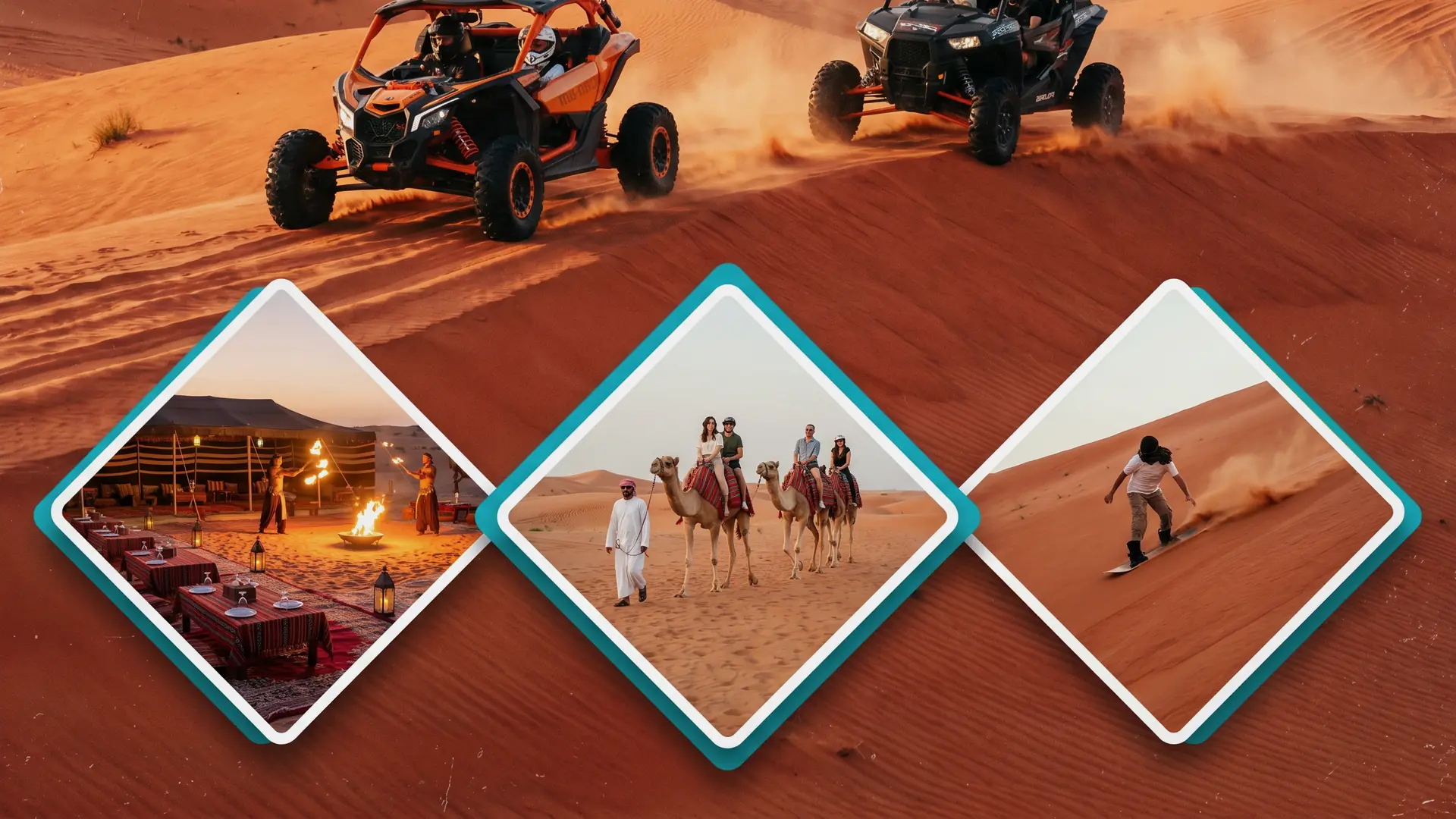
Take the ATV leg first while your grip is still fresh, then switch into a buggy for the second half. Figure on roughly AED 290 to AED 1,100 once machines are picked.
Every other booking on this site gets a yes by default. This one doesn't. Sloppy technique that four wheels would happily absorb gets exposed immediately on two, and a KTM offers nothing to hide behind the way an ATV quietly does.
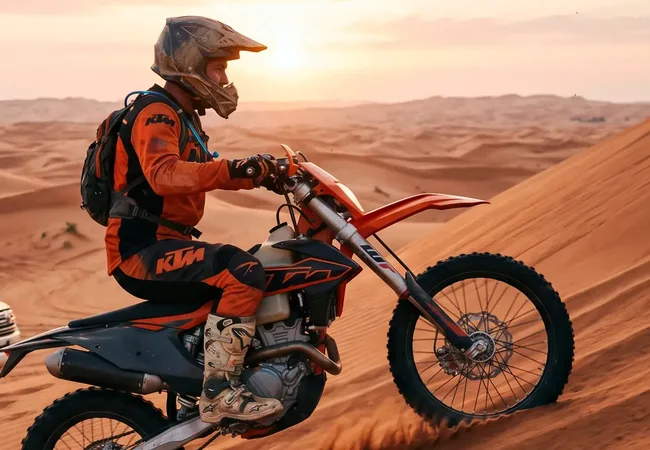
AED 850 covers the first hour, AED 1,250 if you stretch it to two. Turn up with real off-road hours behind you — enthusiasm alone will not clear the check.
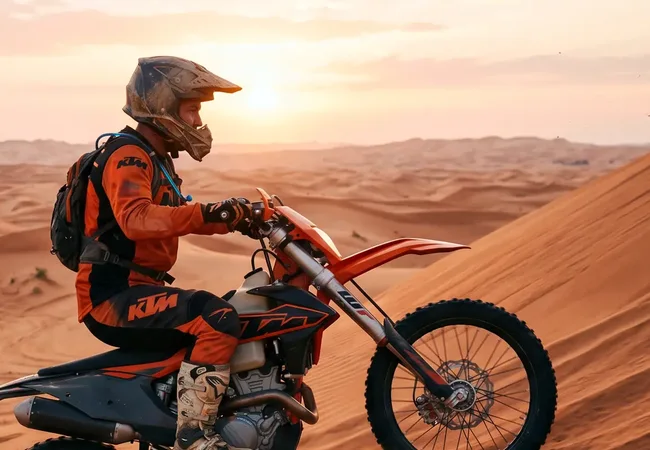
Reserved strictly for riders tackling the advanced route, and a guide has to actually watch you ride before it ever leaves the rack. No set rate up front — that part gets confirmed afterward.
Didn't pass the KTM check? Step onto the Raptor 700cc instead — nearly the same adrenaline, minus the two-wheel balance act.
A professional driver takes the wheel here instead of you, dune bashing fully included, with Land Cruiser safaris starting from AED 225. Most mixed groups end up pairing one of these with the ATVs.
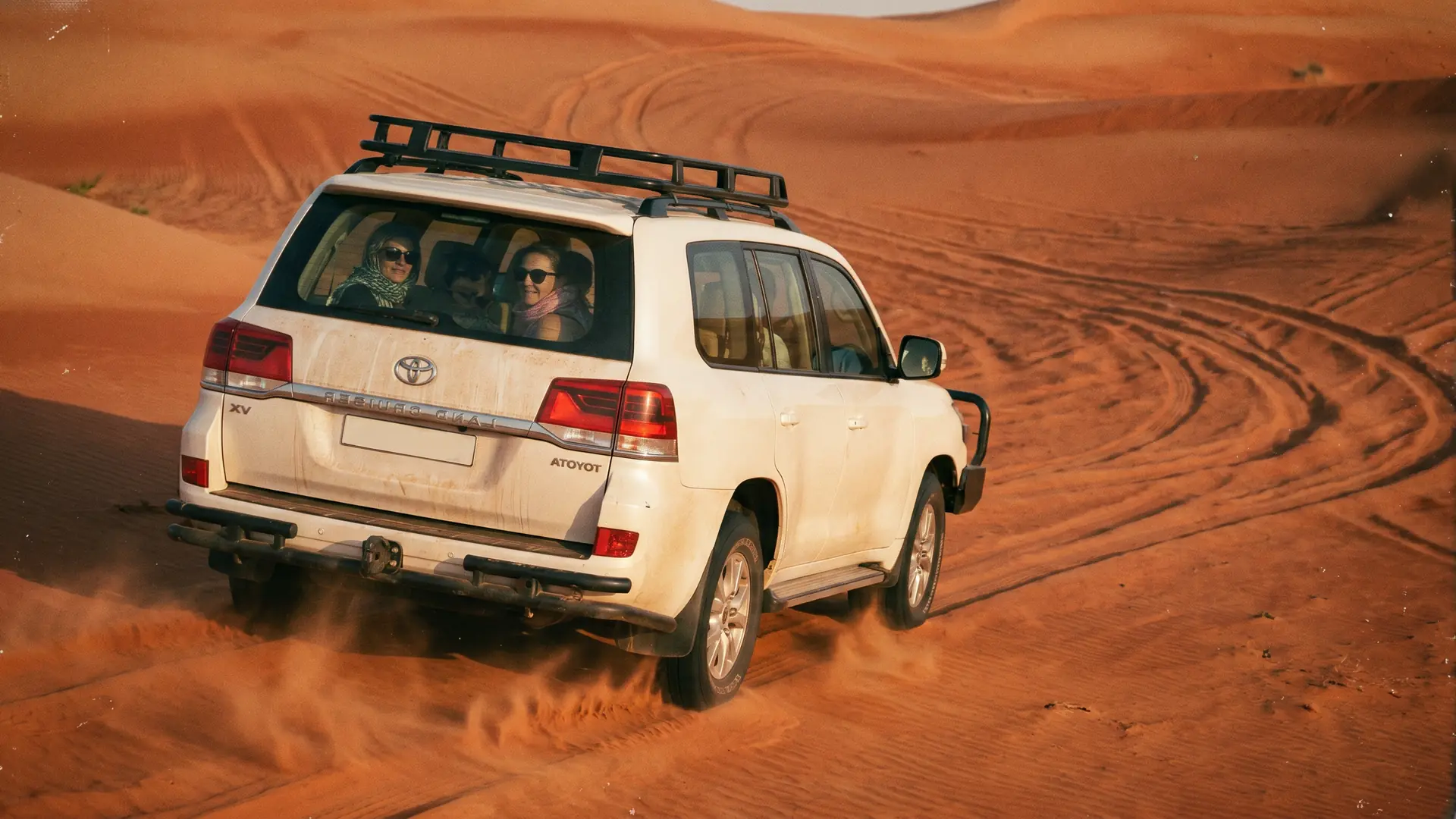
Leaving early catches the sand at its coolest, still holding onto overnight's chill, and gets you back into the city before the afternoon has properly started.
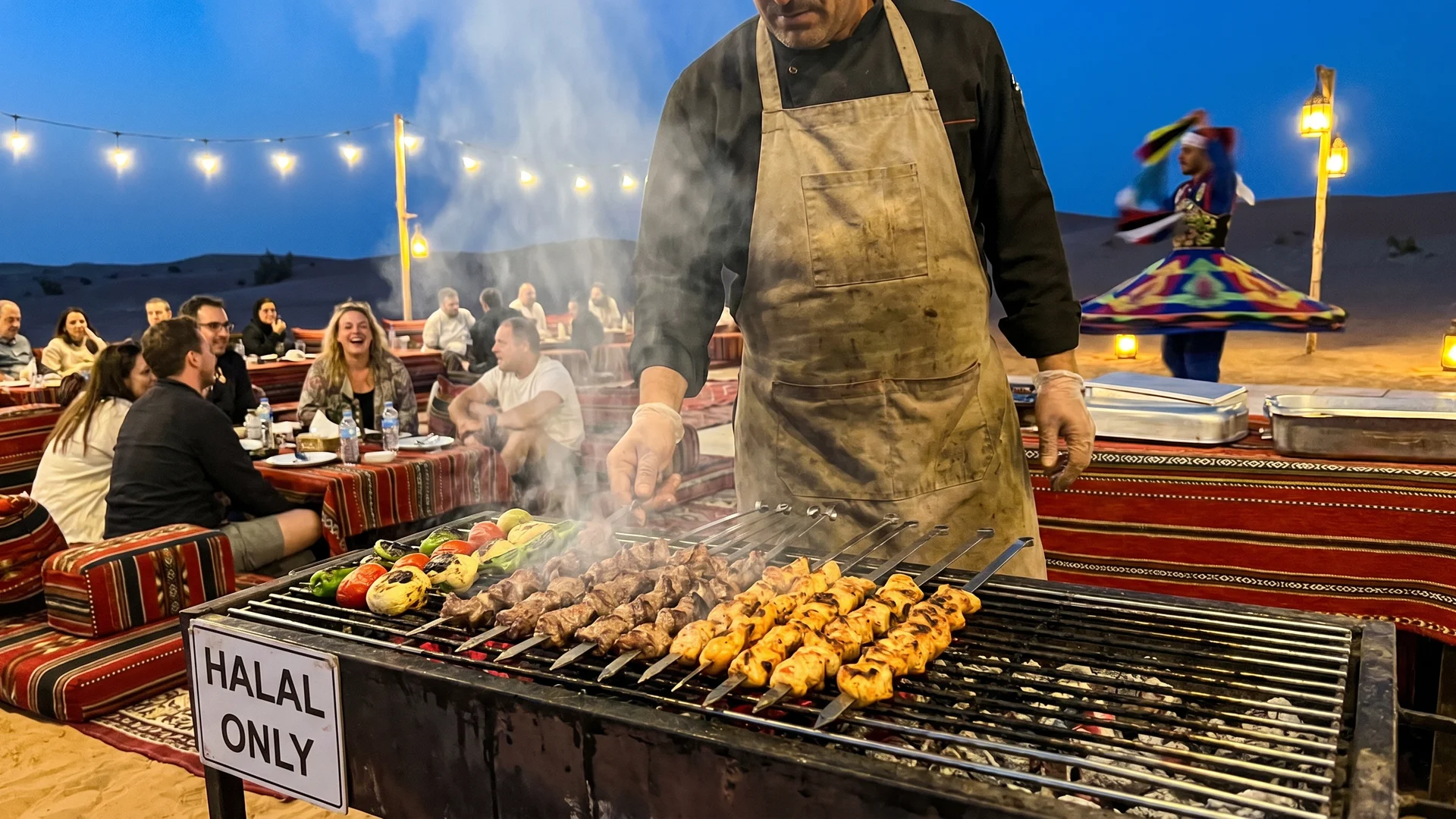
Dune bashing, a sunset over the ridgelines, the camp, halal BBQ, and transfers covered in both directions.
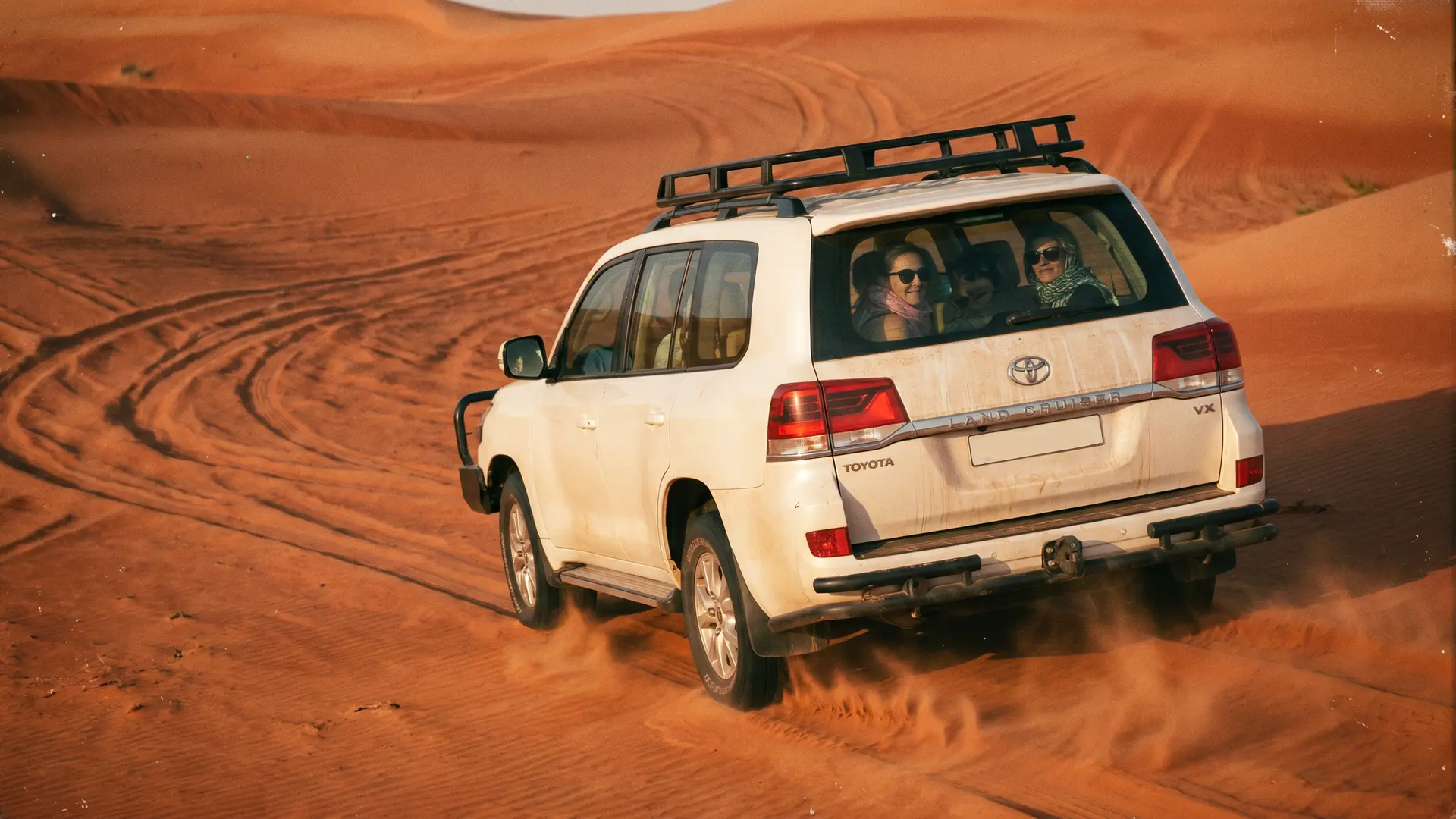
Your own driver, your own table at the camp, and an itinerary that bends around your group rather than sharing a schedule with strangers.
Private options extend further than the cards above show: mornings run AED 799, evenings AED 1,400, with overnight camping and corporate bookings both available too. Motion sickness a concern? Ask about the gentler route that drops dune bashing from the itinerary altogether.
You're collected while it's still dark out, and touching back down happens well before most hotels have even started laying out breakfast. Flights operate from roughly September through May, and out of everything covered on this page, weather has the biggest say over whether this one goes ahead.
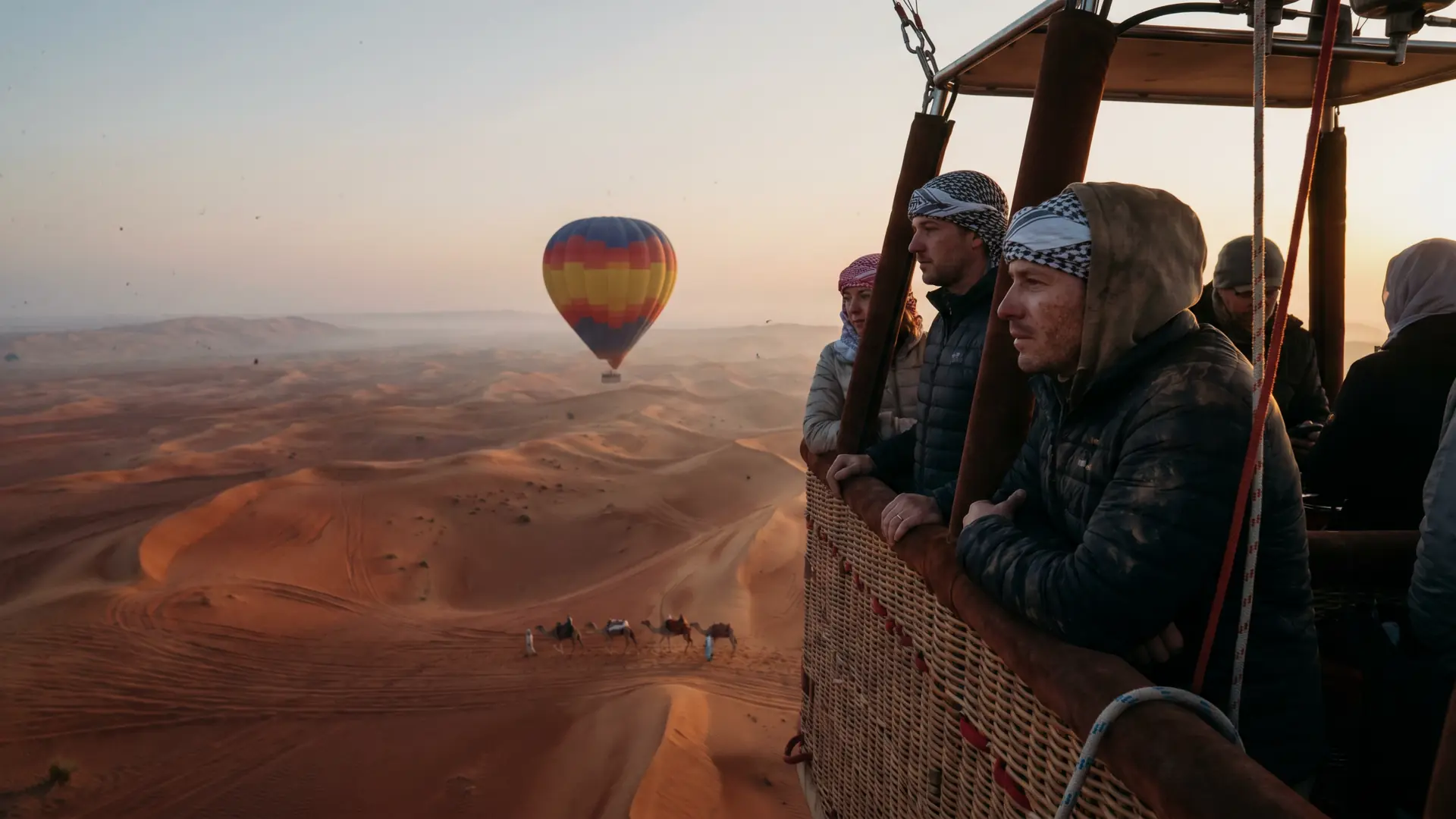
Three tiers cover it: the base flight for AED 1,049, falconry worked in for AED 1,149, or a full breakfast afterward once the price reaches AED 1,349.
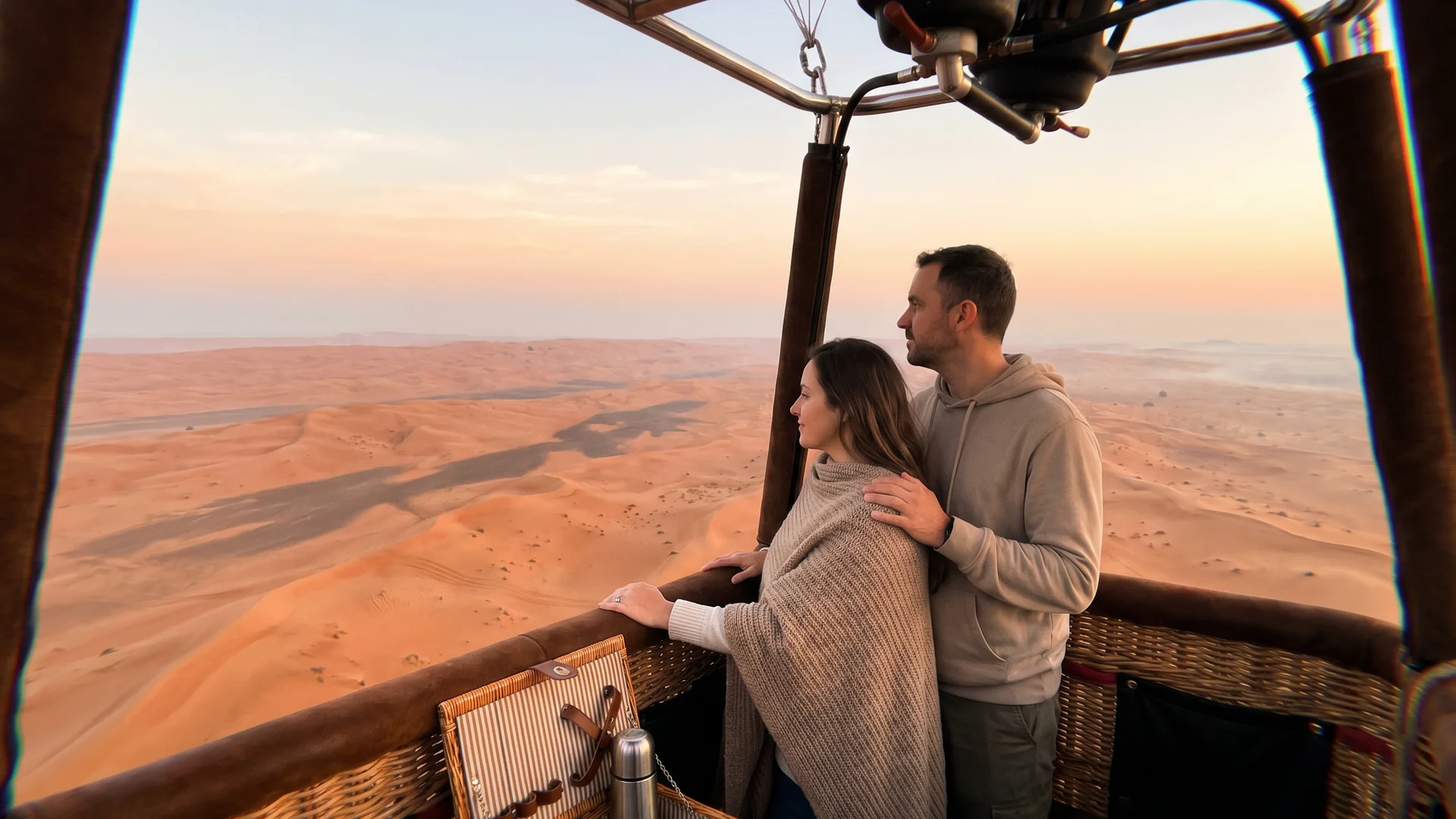
Nobody else goes up with you on this one — the whole basket is reserved for your party alone, which is exactly why proposals and anniversaries book it most.
Add this on for the youngest member of your group, the oldest, or anyone who read the Raptor section above and quietly decided that wasn't for them.
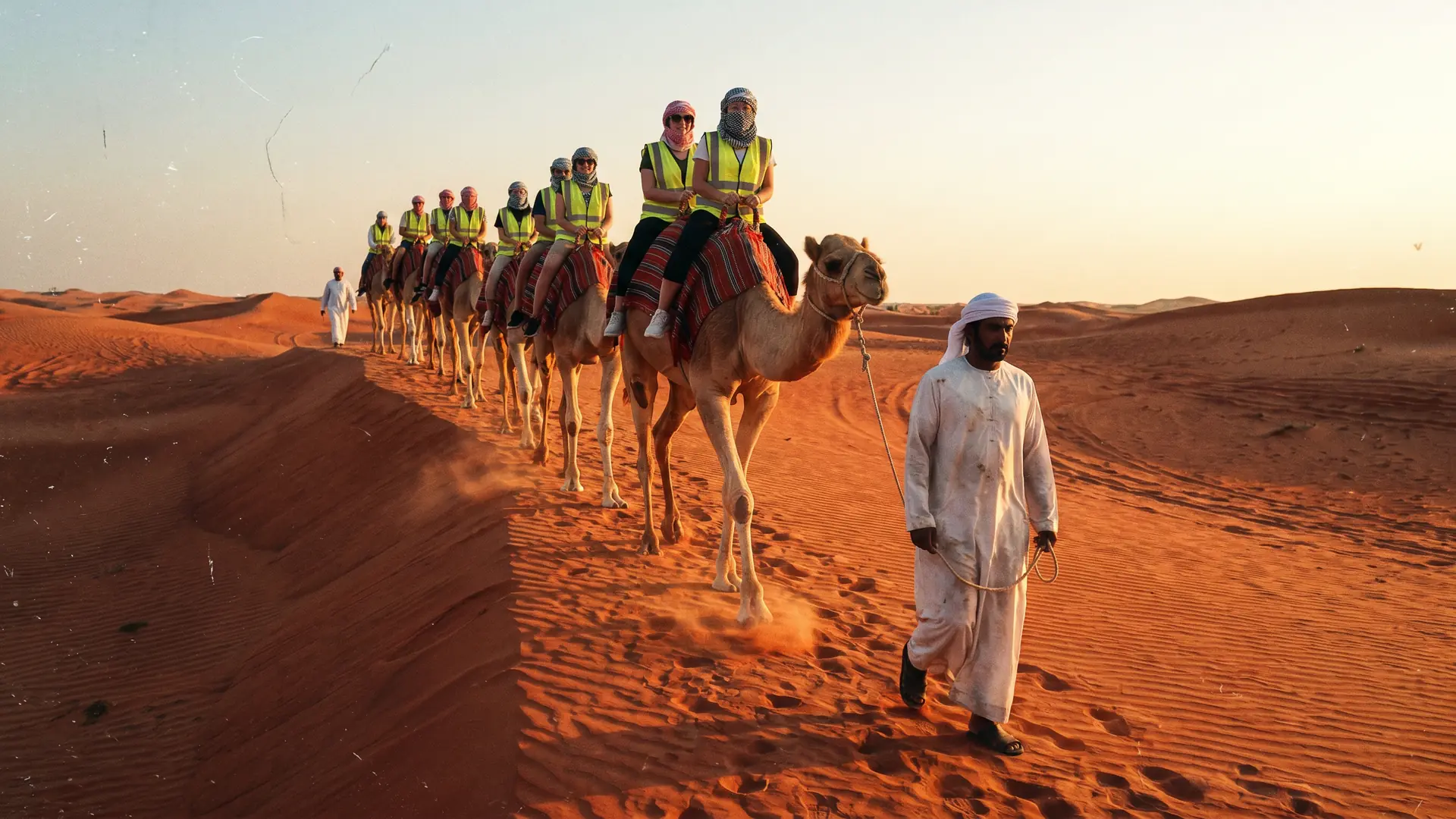
This walking route covers the identical dunes the ATV fleet rides, just at camel pace, and it welcomes children as young as three with an adult alongside.
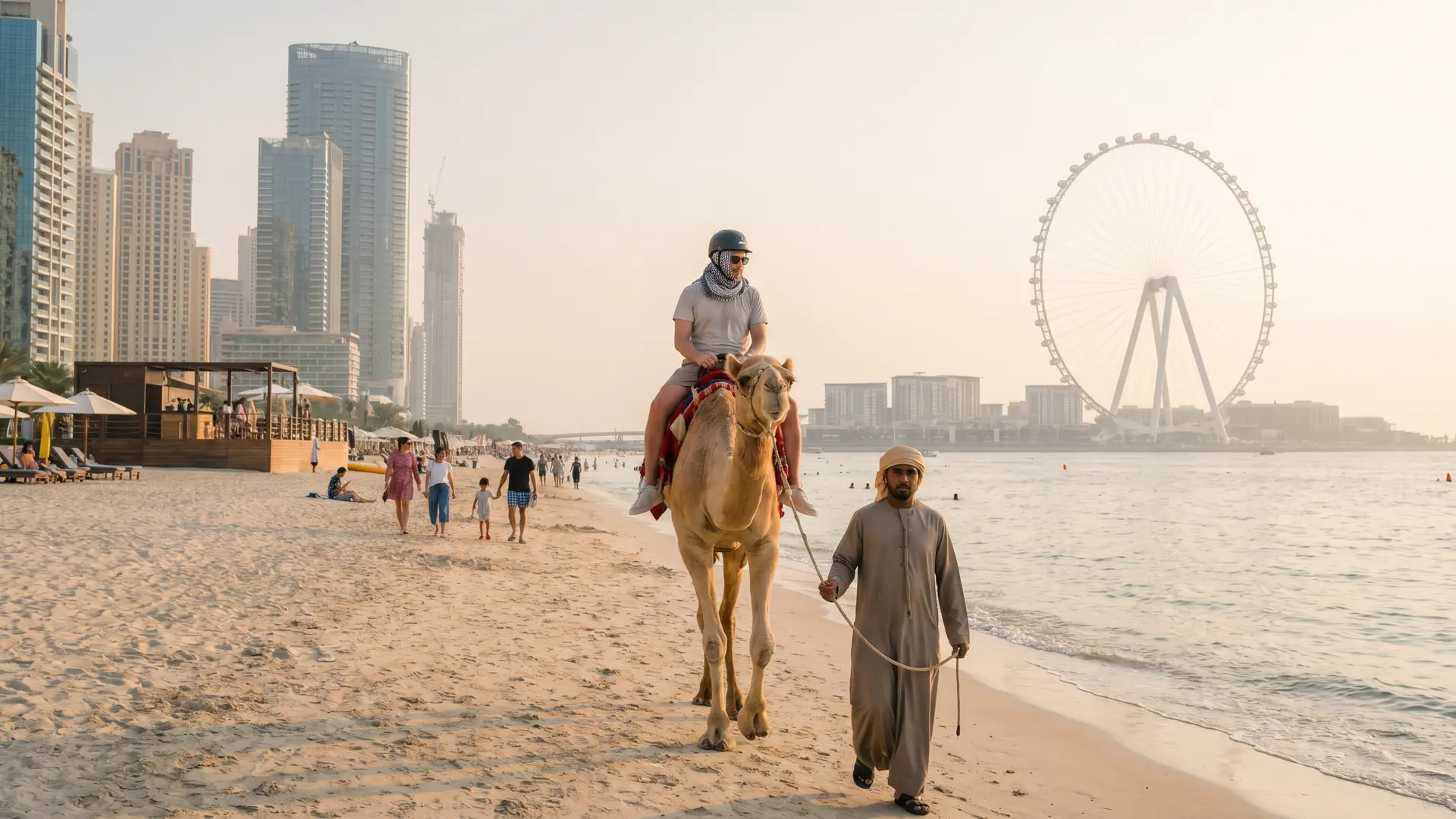
Skip the drive out to Al Lahbab entirely for this one. It happens right on the JBR sand, skyline included, which is the exact photo most visitors are hunting for.
Guided horse riding across the desert is also on offer from AED 575, for anyone who already has time in the saddle.
There's no printed rate card for this tier. Group size, which machines you want, and how many hours you're carving out of the day all move the number, and a figure comes back the same day you ask.
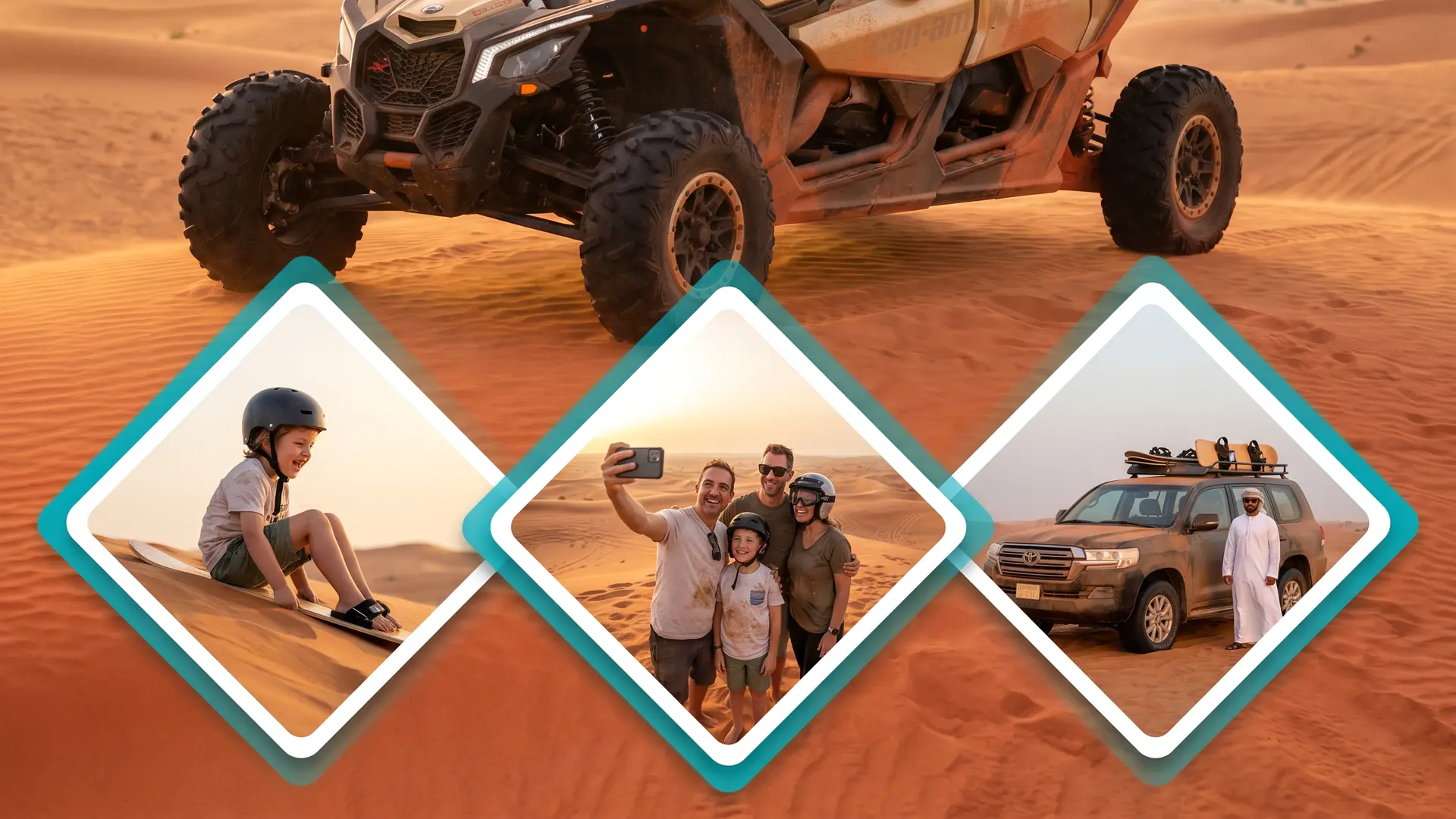
Layer ATV, buggy, safari and BBQ into one outing and the number typically settles somewhere between AED 700 and AED 2,200. Bolt a sunrise balloon onto the start for what people call the ultimate version.
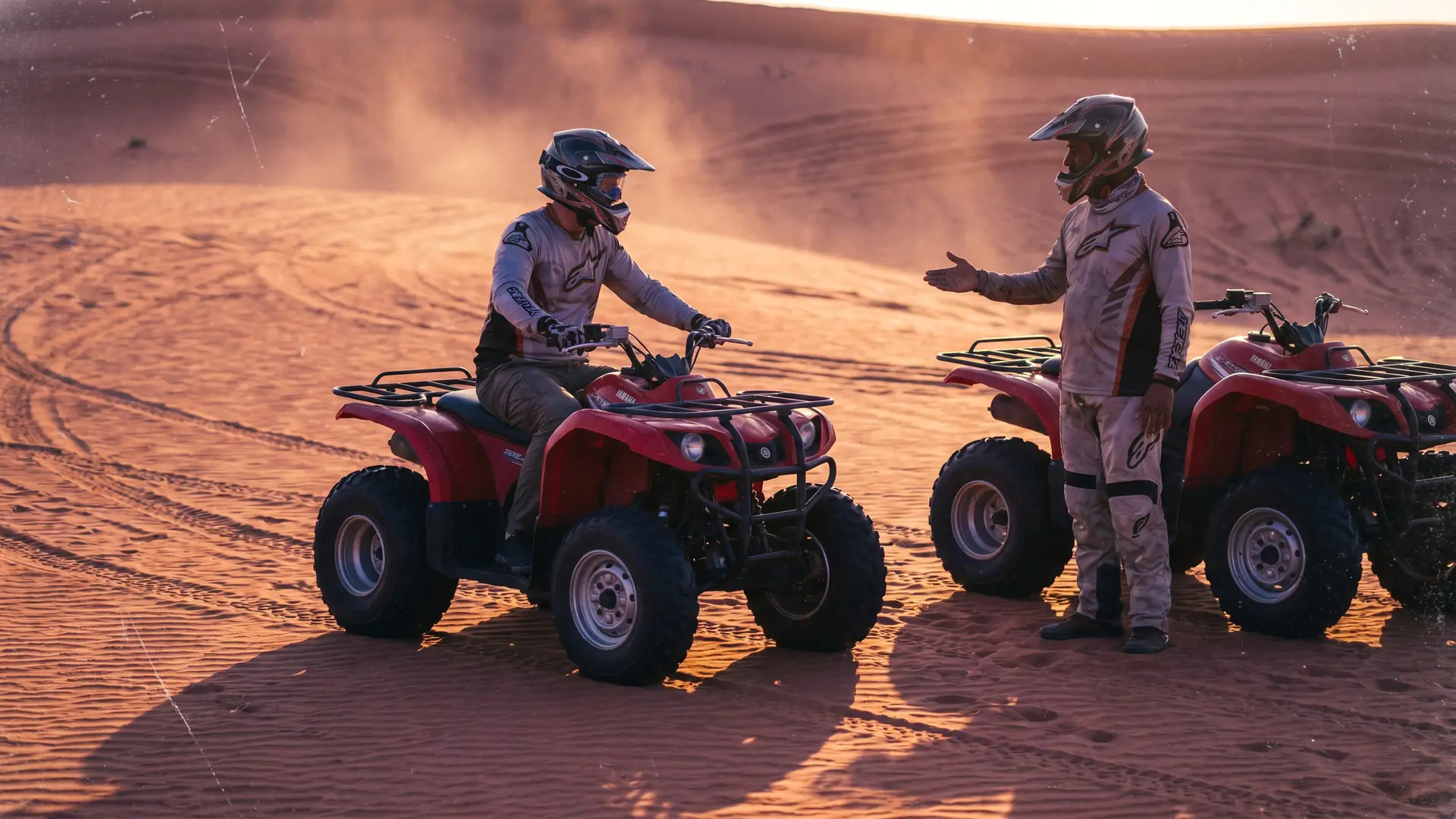
A dozen-plus guests can be split across ATVs and buggies under one team of guides, run on a schedule built around your event instead of a walk-in slot.
Southeast of the city, off the road toward Al Ain, is where every machine on this fleet actually touches sand: Al Lahbab. The rust-red colour in the photos isn't a filter, and neither is the terrain behind it — genuine bowls and ridgelines that reward a heavier machine and punish a soft one, in a way the flattened dunes closer to the highway simply don't.
Every session opens on flat ground back at base rather than straight out on a dune, and that opening lap is really the whole safety system in miniature. It's the point where a guide confirms whether the machine you were handed actually suits how you ride.
This sequence runs identically no matter which of the eight machines you end up assigned. The only part of it that changes length is the actual riding.
City-based riders get collected directly; self-driving arrivals receive the meeting-point pin as soon as their booking is confirmed.
Helmets and gear go on first, then a walkthrough matched to your specific machine — throttle response, braking, body position, and the hand signal your guide uses to call a stop.
The guide watches how you actually handle the machine across a few practice laps on flat sand, and that read is what confirms or adjusts the route from here.
From there the group tucks in behind the lead rider, threading through the bowls and ridgelines with stops built in along the way for photos.
Water and a short breather back at base, your photos from the session handed over, then either the ride into the city or straight into whatever else you booked.
Booked dinner in? The group moves straight to the halal BBQ camp from this point, no detour needed.
The 90cc lane keeps its nine-to-twelve bracket under constant supervision, guardian included. Kids younger than that don't ride solo, though a seat beside a driving adult in the buggy works, and a camel welcomes them starting from age three. Flag anything borderline in your group before payment rather than at the briefing, since that's when it can actually get sorted. A DTCM licence covers this operation, held by Dream Land Adventure Tourism, and once you're out on the sand, whatever the guide decides about machine and route stands as final.
Based on 691 Google reviews
Based on 1,326 reviews
It runs per rider across eight machines, so what you pay depends entirely on which one you're assigned. The floor sits at AED 150 for the supervised kids' 90cc; adults get on from AED 200 on the 220cc, with AED 250 the going rate for the 400cc most riders choose. Top of the fleet, the Raptor 700cc, costs AED 795 once a guide has cleared you for it. Bundle in the Land Cruiser safari and BBQ camp and a morning slot totals AED 290, an evening one AED 375.
Seven of them, yes. The 90cc, the 220cc, all three 400cc variants, the Grizzly 450cc and the Raptor 700cc all carry the Yamaha badge. The sports quad 625cc rounds out the fleet under its own name rather than Yamaha's, though it runs the identical Al Lahbab route as everything else on the rack.
Al Lahbab is the answer, a stretch of desert reached heading toward Al Ain, about 45 minutes from Downtown door to door. Making that drive is worthwhile because it's what separates this spot from the paler sand nearer the highway — Al Lahbab is genuinely where the dunes turn that deep rust-red colour.
No licence is needed, since the riding happens entirely on private desert land. Prior experience isn't required either, provided you take the 220cc and flag that at the briefing. A flat-sand warm-up lap exists purely so a guide can match your route to actual ability before anything steep begins.
Guided from start to finish. Your own machine, yes, but you follow a lead rider who sets the pace, keeps distance between everyone and calls each stop. Solo runs into the dunes aren't part of the format, and the whole group moves at whatever speed its most cautious rider needs.
Nine to twelve, riding the supervised 90cc lane at AED 150 with a guardian close by and kept apart from the adult route. Anyone younger doesn't ride solo, though joining as a passenger next to a driving adult in the buggy works, and camels welcome kids from age three.
Pickup is quoted separately rather than folded into the headline price. Collection points cover the usual central spots — think Downtown, Business Bay, the Marina, JBR and Deira — while self-driving works just as well, with directions sent once you've confirmed.
Budget roughly half a day once travel time is counted in. The riding itself is one fixed session, but the round trip out to the dunes and back adds close to 45 minutes each direction, which is why most bookings tack a safari or dinner onto what would otherwise be a short solo outing.
Closed shoes are the one non-negotiable, alongside sunglasses and clothes you won't grieve once sand works its way in — helmets are handled on-site. A face buff or scarf beats every other item on this list if you're only packing one extra thing. Keep a spare outfit in the car and the drive home stays a lot more pleasant.
Riders bog down in soft sand on nearly every session, typically from letting off the throttle mid-climb, and the fix is always the same: the guide loops back and tows you free. No charge attached, no drama made of it, just a couple of minutes lost.
Lean ATV when every member of the group wants their own handlebars to hold, since that pricing is charged per head. Lean buggy when the group has just one or two willing drivers, because the fee stays flat no matter how many passengers ride along. Groups with a mix of confidence levels often split the difference and book some of each.
Riding continues, just shifted to the edges of the day. Late May through September pushes sessions to early morning or late afternoon, since midday sun on open sand turns genuinely brutal. October through April keeps the whole day comfortable.
Poor visibility or high wind means a rescheduled session, not a cancelled one, and a replacement slot gets offered before it becomes an issue, at no added cost. This fleet actually copes with marginal conditions better than most other activities on this site — the balloon flights are usually the first thing grounded.
A midweek slot rarely needs more than a few days' notice; aim closer to a week out for a Friday or Saturday. The Raptor 700cc and late-afternoon sessions are the first to disappear from the calendar. Secure online advance payment confirms your booking, support available 24/7.
No two machines on this eight-strong fleet are actually the same underneath: a supervised 90cc for kids at AED 150, four different 400cc-class machines built around the standard adult route from AED 250, a heavier Grizzly 450cc for the longer routes at AED 450, a sport-tuned 625cc at AED 700, and a Raptor 700cc gated behind a rider check at AED 795. Seven of the eight carry the Yamaha badge; the sports quad completes the lineup under its own name. Away from the quads, this same operator flies sunrise balloons starting at AED 1,049, leads camel treks from AED 150, rents dune buggies beginning at AED 599, and runs Land Cruiser safaris from AED 225.
Short on time to compare all eight machines yourself? Fold whichever one you pick into the evening safari and BBQ camp for AED 375 total, a combination that outsells every other package on this site by a wide margin. Secure online advance payment confirms your booking, support available 24/7.
Its own supervised loop, scaled to smaller hands and a softer pull.
AED 150The softest throttle response on the rack, built to forgive a bad line.
AED 200What the entire adult route is actually designed around.
AED 250Same frame, a second seat, one fee that covers both riders.
AED 350Identical seating position, a noticeably harder pull out of soft sand.
AED 350Heavier and wider through the stance, built for routes that run long.
AED 450The one machine on this rack that isn't actually badged Yamaha.
AED 700Top of the fleet, and never handed over without a rider check first.
AED 795Seven Yamahas and one outside brand make up the eight-machine fleet, spanning a supervised kids' machine, five adult all-rounders built around one shared platform, and a sport-tuned model that stands apart from the rest.
Start with the roster itself, because most people arrive assuming a "quad fleet" is one machine repeated eight times with different paint. It isn't. The Yamaha lineup here runs the 90cc for kids, the 220cc for adult beginners, three separate machines built on the 400cc platform (standard, double and turbo), the Grizzly 450cc, and the Raptor 700cc at the top. That's seven models under one badge. The eighth machine, the sports quad 625cc, comes from a different manufacturer entirely and was chosen specifically for a riding character none of the Yamahas offer.
Grouping them by role rather than just by size makes the lineup easier to hold in your head. The 400cc platform is really one chassis wearing three jobs: the standard version most tours are built around, a widened double-seat version for two riders, and a turbo version with the same seating position but noticeably more pull out of a soft climb. Then there's the entry pair, the 90cc for children and the 220cc for adult first-timers, both built around forgiveness rather than speed. At the top sit the Grizzly and the Raptor, which read as opposites of each other despite both being "big" machines — one built for distance and stability, the other for outright pace. The sports quad occupies its own lane below the Raptor, closer in spirit to the Raptor's intensity but with a completely different chassis underneath it.
This matters beyond trivia, because naming the actual model when you message the booking team gets a faster, more specific answer than just asking for "an ATV." Bookings and scheduling run on model names internally — Grizzly, Raptor, 400cc turbo and so on — so using that same language on WhatsApp skips a round of back-and-forth. The full lineup, with current pricing for each, sits in the machine gallery above.
From the 90cc reserved for nine-to-twelve-year-olds up to the 700cc Raptor at the top of the adult tier, with the bulk of the fleet's actual traffic sitting on the 400cc-class machines somewhere in between.
Laid out in order, the spread runs 90cc, 220cc, 400cc (in its three variants), 450cc, 625cc and 700cc. What stands out isn't the range itself so much as how unevenly it's distributed. Rather than eight evenly spaced engine sizes, there's a cluster of three machines sitting at exactly 400cc, flanked by a light entry pair below and three progressively bigger machines above. That clustering isn't an accident of the fleet growing over time; it reflects where most riders actually land in terms of ability.
The reason three separate machines share the same 400cc figure comes down to what each one is solving for, not how big its engine is. The standard version handles the default route. The double solves a seating problem — two riders, one machine, one fee — without changing the platform underneath. The turbo solves a power problem for repeat riders who found the standard version too tame the second time around. None of the three needed a different engine size to do its job; they needed different equipment bolted onto the same one.
Above 400cc, the jump to 450cc, 625cc and 700cc stops being about incremental power and starts marking genuinely different categories, covered in more detail in the price table below and in the next section here. A rider working their way up the fleet over a couple of visits will notice the step from 220cc to 400cc feels gradual, while the step from 400cc to 625cc feels like a completely different sport.
Genuinely different, past a certain point. The 625cc and the Raptor change your actual riding position and how much of the work your body does; the Grizzly 450cc changes ride quality over rough ground more than it changes outright speed.
It's tempting to treat engine size as a single dial that just goes up, but that's not really how the jump feels once you're actually sitting on the machine. Moving from the 220cc to the standard 400cc barely changes your riding position at all — you sit the same way, hold the same posture, and the main difference is a longer throttle band that makes the climbs feel less effortful. That's a "more power, same bike" step.
The sports quad 625cc breaks that pattern entirely. It expects you to stand up through rough sections and shift your weight into turns rather than staying seated and steering with your arms, which is a genuinely different riding technique, not just a stronger version of the same one. Sit still and hope on the 625cc the way you might on a 400cc, and the machine punishes that passivity far more obviously than anything below it does.
The Grizzly 450cc tells a different story again. It isn't meaningfully faster than the standard 400cc in a straight line, but its heavier frame and wider stance change how the machine absorbs a rough patch of ground, which is why it gets handed to riders on the longer routes rather than riders chasing top speed. So the honest answer splits three ways: some jumps up the size chart change almost nothing about how you ride, some change your literal riding stance, and some change comfort over distance instead of speed. Chasing the biggest number available isn't the same as picking the machine that actually suits what you want out of the session.
Age gates the 90cc lane outright and nothing else. Past that single hard rule, it's the warm-up assessment — how you actually handle a machine on flat sand — that decides both your route and, often, which specific machine you end up on.
Age only draws one firm line on this fleet: nine to twelve for the 90cc, and nobody below that age riding solo on anything. Every other machine, from the 220cc up through the Raptor, is available to any adult, which surprises people who expect a stricter age-tiered system the way road-legal vehicles work. There's no separate "over 40" or "under 25" rule tucked in anywhere.
Beyond that gate, assignment is really a two-part process. What you tell the team when booking, or say out loud at the briefing, sets an initial expectation — claim solid off-road hours and you'll likely be pointed toward the 400cc or above rather than started on the 220cc by default. But the warm-up lap is what actually confirms it. A guide watches how you handle the machine on flat, forgiving ground before anyone points you at a real dune, and that read can move you up a tier or hold you back a tier from wherever the conversation started.
Availability plays a smaller but real role too, worth being upfront about rather than pretending it doesn't exist. If every Raptor is out on a given afternoon, a guide might offer the sports 625cc as the closest substitute rather than a downgrade to something far tamer. None of this is arbitrary on the day — it's covered from the booking side in more detail under before you book — but it does mean the machine you picture when you book isn't always guaranteed to be the exact unit you ride, even if the tier and price stay the same.
Yes, a real one. The 90cc isn't a shrunk-down adult machine; it's built to its own scale, with a softer throttle response suited to smaller hands, and it's confined to its own supervised loop rather than the dune route everyone else rides.
It's a fair question, because plenty of activities do just hand children a scaled-down version of the adult equipment and call it a day. That's not really what's happening here. The 90cc sits at its own end of the fleet, physically smaller and considerably gentler in how the throttle responds, built around what a nine-to-twelve-year-old can actually control comfortably rather than being a 220cc with the power turned down.
The bigger difference, honestly, isn't the machine at all — it's the route. Every adult machine on this fleet, from the 220cc up, eventually rides the same bowls and ridgelines out at Al Lahbab. The 90cc never does. It stays on a marked, flat loop next to the base camp, physically separate from the terrain the adults cover, with a guardian within sight the entire session. That structural separation is arguably a bigger safety feature than anything mechanical on the machine itself.
Worth saying plainly: it isn't a toy. It's a real ATV, built to a genuine specification, just one scaled deliberately for a smaller rider and a controlled environment rather than open dune terrain. Families sometimes worry it'll feel like a consolation prize next to the adult fleet; in practice, kids on the 90cc tend to come off it wanting another lap rather than eyeing the bigger machines with envy.
Helmets, closed shoes and a face buff are what you put on. The machines themselves carry the kill switch, a fuel load matched to your booked duration, and a pre-handover inspection that catches a problem before you're ever out on the sand.
It's worth separating these two categories cleanly, because people tend to lump "safety" into one bucket when really it splits between what you're wearing and what's underneath you. On the worn side: a supplied helmet, your own closed-toe shoes, sunglasses against the glare, and ideally a buff or scarf for the dust. None of that is built into any machine — it's rider-side equipment, covered in full under safety and suitability.
On the machine side, every unit on the fleet gets inspected before handover, not just the Raptor or the KTMs that get the reputation for stricter checks. That inspection covers the kill switch, fuel loaded for your specific booked duration rather than a generic fill, and a general mechanical once-over before it's assigned to a rider. None of this is visible to a first-time rider glancing at the machine, which is part of why it's easy to underrate.
The layer that sits between rider gear and machine hardware is process, not equipment exactly: a lead guide controlling pace, fixed spacing kept between riders on the route, and the warm-up assessment that functions as a live safety check as much as a route-matching exercise. Take the helmet, the inspected machine and the guide's control of the group together, and that's the actual safety system, rather than any single piece of it working in isolation.
Every machine gets checked before it's handed over for a session, not on some longer weekly cycle. A unit flagged during that check gets pulled from rotation rather than sent out anyway, which occasionally means you're offered the nearest equivalent tier instead of a specific model.
The inspection cycle referenced in the safety section above isn't a once-a-week formality; it happens per handover, meaning the same physical ATV gets looked over again before its next rider, not just once each morning. That's a meaningfully tighter cycle than a lot of visitors expect from a desert rental fleet, where the assumption is often that machines get checked once and then run all day.
This is also the honest answer to a question that comes up occasionally: why didn't I get the exact machine I asked for? Sometimes it's a straightforward availability issue, but sometimes a specific unit has been pulled after a check flagged something worth looking at, and a guide substitutes the nearest equivalent rather than sending out a machine with an unresolved issue. That trade‑off, a slightly different unit within the same tier rather than the exact one you pictured, is the maintenance system doing its job rather than failing at it.
It also explains something reviewers occasionally mention without quite naming it: the machines on this fleet tend to feel tighter and better cared for than the scuffed, heavily-used rental units some operators run. That's less a matter of buying newer equipment and more a matter of the per-ride inspection habit actually holding up over the thousands of sessions this fleet runs each year, back at base before every single handover.
AED 350 against AED 250 for the standard version, even though the seating position and chassis are identical. The extra AED 100 buys the stronger pull out of soft climbs, not a different machine underneath you.
You can name it in your booking notes or over WhatsApp and the team will try to hold it, though final confirmation happens after the warm-up if a guide has any concern about the match. Naming the exact model rather than just “an ATV” gets a faster, more accurate reply.
Not harder, just different. It's heavier and more planted, which actually makes rough ground easier to manage, though it doesn't change direction as quickly as the lighter 400cc-class machines do.
It's simply a different manufacturer's model, chosen specifically for a sport-tuned chassis the Yamaha lineup doesn't offer. The fleet isn't built to be Yamaha-exclusive; it's built around whichever machine actually suits each tier, and the 625cc earned its place on riding character rather than brand matching.
Switching up on the day is possible if a guide clears you after the warm-up lap and a unit happens to be free, but booking it directly in advance is the safer route, since it's one of the first machines to sell through, especially in late-afternoon slots.
No — AED 350 for two people on the double against AED 250 for one person on the standard 400cc, so it actually works out cheaper per rider, not more expensive.
Mid-session swaps aren't part of the standard format, since the group moves together behind one guide, but say so at the briefing or during the warm-up and a guide may adjust which machine you're on before the group actually sets off.
Not recommended as a first machine. It rewards standing and shifting body weight in a way the 220cc and 400cc simply don't ask of you, and guides typically steer first-timers toward the more forgiving tiers instead.
No — licensing and age rules track the same private-land, no-licence-required basis as the rest of the adult fleet. Machine choice affects riding difficulty, not the legal requirements around who can book it.
Yes — the guide sets one route and one pace for the whole group regardless of which individual machines people are on, so a 220cc and a Raptor can ride the same session as long as the route suits the more cautious rider.
Choose your machine from the eight on the fleet, lock it in with online payment, and the team confirms your exact pickup slot over WhatsApp the night before you ride.